



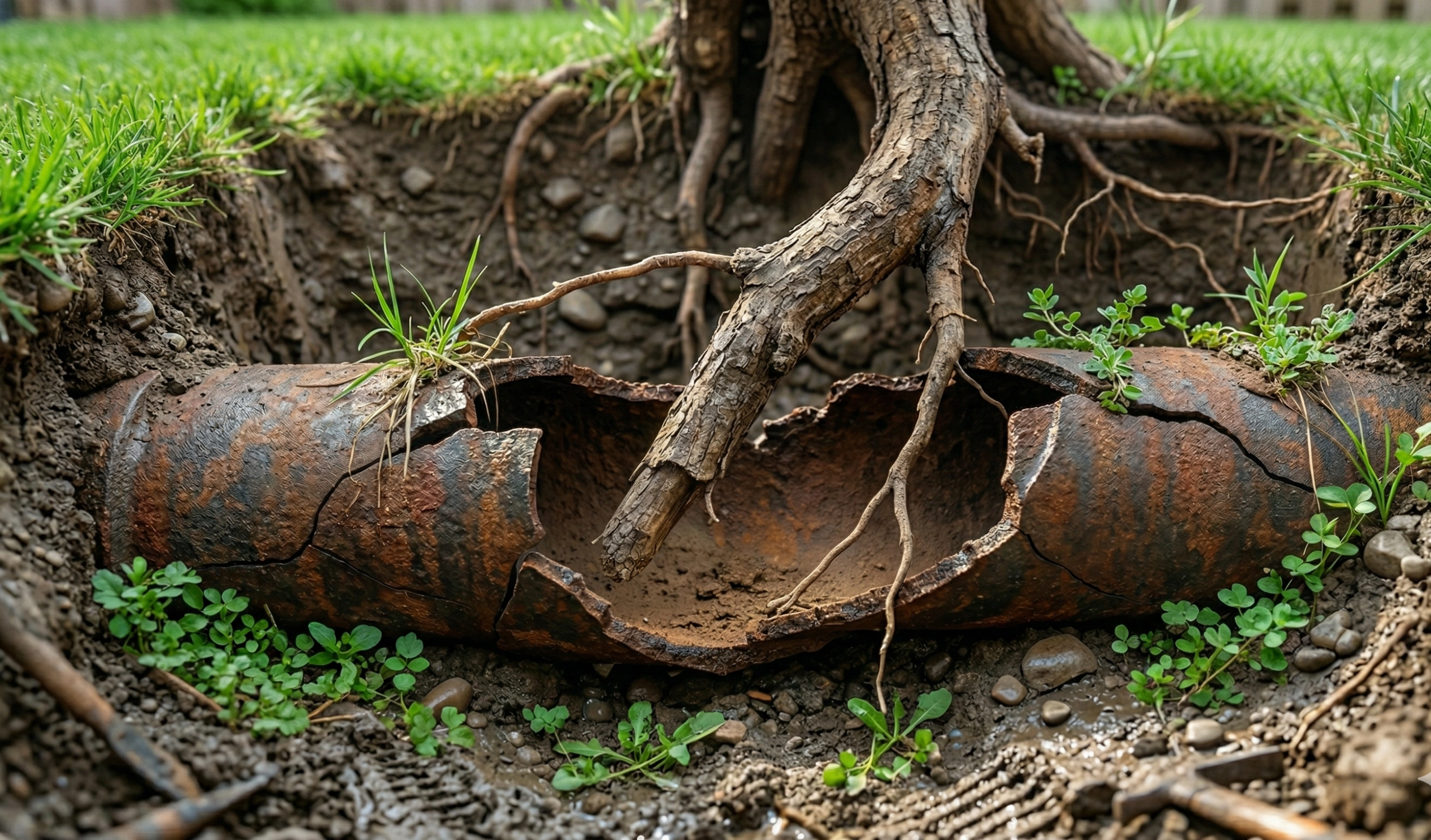
Age, Shifting Ground, and Tree Roots in Sewer Lines: What Causes Sewer Line Damage?
Are you dealing with recurring clogs, slow drains, or sewer backups? The problem may not be inside your home—it may be underground.
The team at Hirschberg Mechanical regularly inspects homes across Montgomery County and Bucks County, where homeowners are surprised to learn the real problem is a damaged or broken sewer line. Most sewer issues don’t happen overnight. They develop over time due to aging pipes, shifting soil, and tree roots in sewer line systems.
We’ll explain what causes sewer line damage, the warning signs to watch for, and what you can do to prevent future trouble.
Summary: What Causes Sewer Line Damage in Willow Grove?
- The most common causes of sewer line damage are aging pipes, ground movement, and tree roots in sewer line systems
- Older materials like clay sewer pipes are especially vulnerable to cracks and intrusion
- Pipe corrosion and shifting soil can lead to a broken sewer pipe or a sewer pipe collapse
- Preventive habits and routine inspections reduce the need for major sewer repair
- Avoid flushing wipes and hygiene products—they are a leading cause of blockages
Why Sewer Line Issues Are Common in Willow Grove
Many homes in Willow Grove and the surrounding areas were built decades ago using materials that wear down over time. During service calls, we frequently find:
- Aging clay sewer pipes that have cracked or shifted
- Pipe corrosion in older metal systems
- Soil movement causing misalignment
- Root intrusion from mature trees
These conditions make sewer systems more vulnerable to damage, especially in established neighborhoods.
1. Aging Pipes and Material Breakdown
One common cause of sewer issues is age. Older homes usually rely on materials like:
- Clay
- Cast iron
- Orangeburg (fiber-based piping)
| Why this matters: | What happens next: |
| These materials weaken and become brittle. We often find that clay sewer pipes develop small cracks that worsen over time. | Cracks allow water and debris to enter Pipes begin to shift or separate The system becomes more vulnerable |
2. Shifting Ground and Soil Movement
Your sewer line sits underground, surrounded by soil that expands and contracts with the seasons.
| What causes movement: | What we see during inspections: |
| Freeze-thaw cycles in Pennsylvania Heavy rainfall saturating the ground Dry periods causing soil to shrink | Pipe misalignment Joint separation Sections of pipe sinking or sagging |
These changes may seem minor, but they create openings where debris collects and could eventually lead to a broken sewer pipe or blockage.
3. Tree Roots in Sewer Line Systems
One of the most aggressive causes of sewer damage is tree roots in sewer line systems.
| Why roots target sewer lines: | What happens once roots enter: |
| Roots expand inside the pipe They trap debris and waste Flow becomes restricted | Roots naturally seek moisture. Even a small crack in a pipe releases enough vapor to attract them. |
Over time, this pressure can cause:
- Severe blockages
- Pipe cracking
- Full sewer pipe collapse
In Willow Grove’s tree-lined neighborhoods, this is one of the most common reasons we perform sewer line repair.
4. Pipe Corrosion and Internal Deterioration
Pipe corrosion is another major culprit behind sewer line damage.
| What causes corrosion: | What it leads to: |
| Chemical reactions inside the pipe Long-term exposure to wastewater Aging materials breaking down | Thinning pipe walls Rough interior surfaces Increased risk of leaks and breaks |
That corrosion creates ideal conditions for buildup and contributes to long-term sewer repair needs.
5. Improper Use
One of the most preventable causes of sewer damage is improper usage. At Hirschberg Mechanical, we regularly see blockages caused by items that shouldn’t be flushed, including:
- Wipes (even if labeled “flushable”)
- Feminine hygiene products
- Paper towels
- Grease or oils
These items do not break down like toilet paper. Instead, they:
- Get caught on rough surfaces inside pipes
- Combine with debris and buildup
- Create severe sewer line blockages
In many cases, what starts as a simple clog turns into a full sewer pipe repair situation.
Warning Signs of Sewer Line Damage
Your plumbing will usually warn you before a major failure. Common warning signs include:
- Recurring clogs or slow drains
- Gurgling sounds in pipes
- Unusual odors or sewage smells
- Water backing up in drains
- Wet spots in your yard
How to Prevent Sewer Line Damage
Many sewer issues can be prevented with simple steps.
| How to prevent sewer backups | How to keep pipes clear |
| Schedule routine plumbing inspections Address minor issues early Keep trees and roots in check near sewer lines | Avoid flushing non-degradable items Pay attention to what goes down your drains Schedule periodic sewer and drain cleaning |
FAQs
The most common causes include aging pipes, shifting soil, tree roots in sewer line systems, and pipe corrosion.
Yes. Roots can enter through small cracks and expand, eventually causing blockages or even a sewer pipe collapse.
Avoid flushing harmful materials, schedule inspections, and address early warning signs before they escalate.
Older homes often still have clay sewer pipes, but modern systems use more durable materials.
Protect Your Home from Sewer Line Damage!
At Hirschberg Mechanical, we’ve been helping homeowners across Willow Grove and surrounding counties for decades. We are a second-generation, family-owned company with a legacy of doing what’s right for our community.
We don’t just fix pipes: we take care of people.
If you’re dealing with signs of sewer line damage or want to prevent future issues, schedule an inspection today. Call now for a free estimate!