



How Extreme Temperatures Affect Your HVAC System’s Lifespan
Your HVAC system keeps your home comfortable year-round, from providing reliable heat in freezing weather to delivering cool air during the summer.
If you live in an area with extreme temperatures, your heating and cooling system may be under more pressure than you realize.
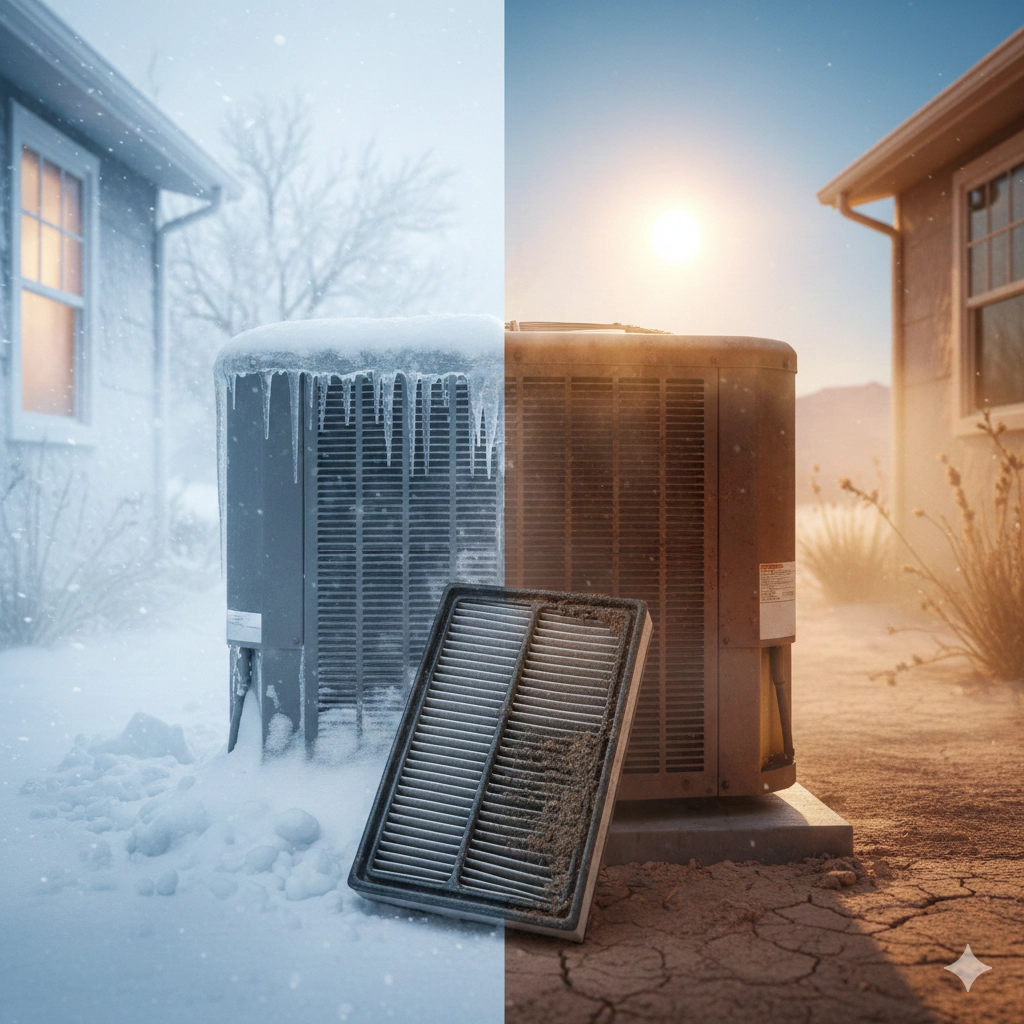
Bitter cold and intense heat take a toll on your system’s performance, impacting its efficiency and overall lifespan.
Understanding how temperature extremes affect your equipment helps you take proactive steps to prevent breakdowns, reduce energy costs, and, most importantly, extend your system’s lifespan.
How Temperature Extremes Impact HVAC Systems
HVAC systems constantly adapt to outdoor conditions. Extreme temperatures force your system to work harder for longer to maintain a comfortable indoor environment.
This added strain leads to mechanical issues over time, which result in costly repairs and reduce efficiency.
These are common ways extreme temperatures affect HVAC systems.
Strain Components
Your system must run longer cycles to keep your home warm when outdoor temperatures drop. Increased runtime puts pressure on critical system components like the heat exchanger, thermostat, and blower motor.
Ice buildup can also occur in freezing temperatures. This further restricts airflow and forces the system to work harder. If unaddressed, this strain causes parts to wear out prematurely.
Routine HVAC maintenance involves replacing air filters and insulating exposed pipes before cold weather causes damage.
Reduce Efficiency
High outdoor temperatures cause significant challenges for your air conditioner. It becomes harder for your AC unit to release heat outdoors as temperatures rise.
When this occurs, it forces the system to run longer cycles, reducing overall efficiency and increasing energy usage.
A struggling air conditioner causes:
- Warm air coming from vents
- Higher utility bills
- Longer cooling times
Inconsistent Indoor Temperatures
A common sign that your HVAC system is under stress is uneven heating or cooling. If you find that certain rooms in your home feel significantly colder or warmer than others, it might mean that your system is distributing air unevenly.
Other warning signs include:
- Frequent cycling on and off
- Strange noises from your furnace, boiler, or AC unit
- Difficulty maintaining a consistent thermostat setting
Higher Energy Bills
A clear sign that extreme temperatures are impacting your HVAC system is a sudden increase in energy bills. Systems require more energy to achieve the same level of comfort as systems age or lose efficiency.
Rising bills indicate:
- Poor airflow or clogged filters
- Outdated or inefficient equipment
- Worn-out components
Sometimes, investing in a new HVAC system might be more cost-effective than continuing to pay high monthly utility bills
Protect Your HVAC System from Extreme Temperatures with Hirschberg Mechanical
If you live in an area with cold winters, hot summers, or both, regular heating and cooling system maintenance is crucial. Timely repairs and regular inspections/tune-ups protect your system from extreme temperature damage.
Call Hirschberg Mechanical today to schedule an HVAC inspection!