



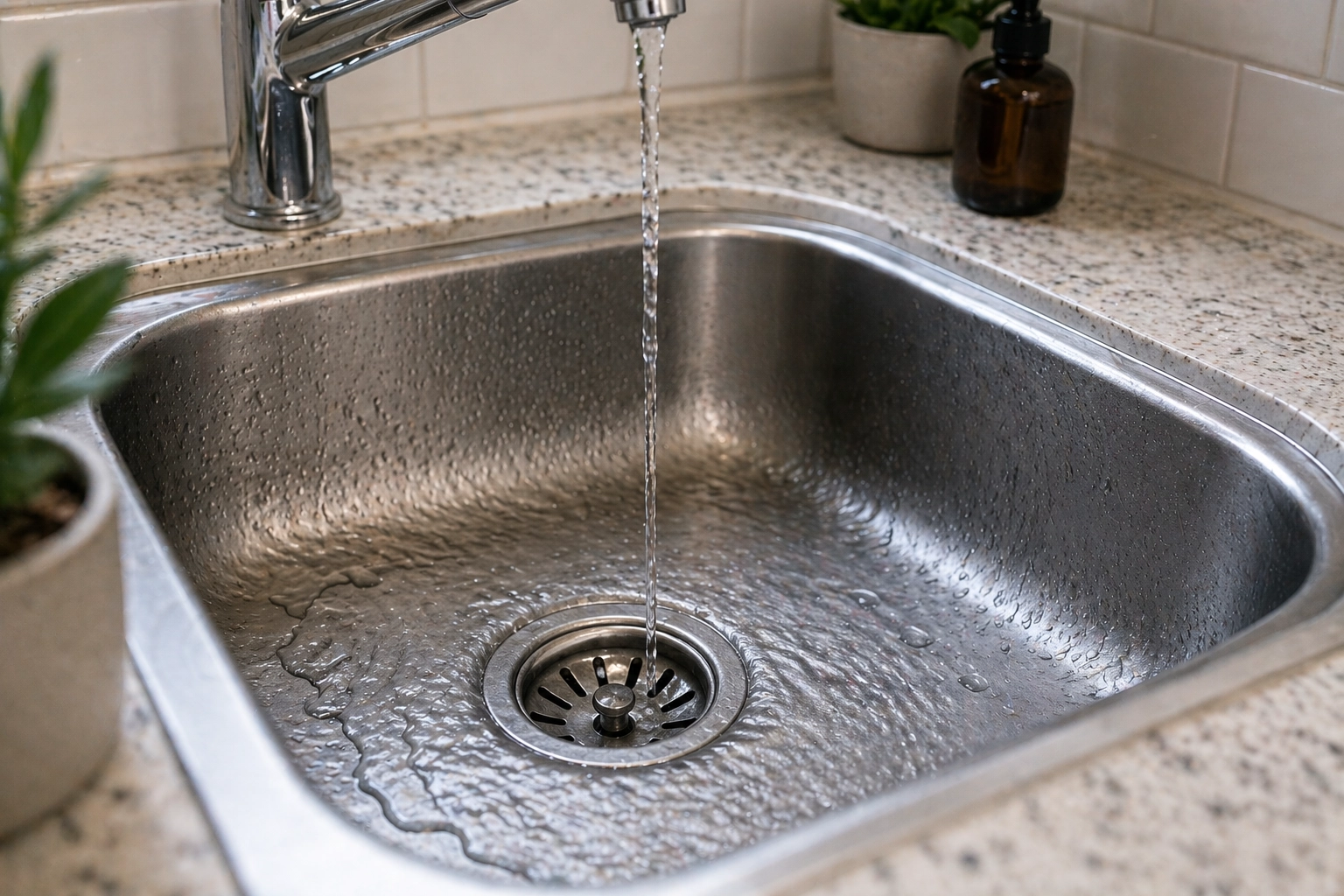
Slow Drains vs. Fully Clogged Drains: What Each Problem Means for Your Plumbing
Most homeowners in Willow Grove don’t think about their drains until something goes wrong. But there’s an important difference between a drain that’s slowing down and one that’s completely blocked. Knowing which one you’re dealing with determines how urgently you need to act.
Hirschberg Mechanical responds to both situations every day. Here’s how to tell them apart, what’s likely causing each one, and when it’s time to call a plumber.
TL;DR
A slow drain means a partial blockage is forming. A fully clogged drain means water has nowhere to go. Both signs of a clogged drain will worsen without treatment. Slow drains can often be addressed with basic maintenance, but recurring slowness or a complete blockage requires drain cleaning or drain repair.
Key Takeaways
- A slow drain is an early warning sign, and a full clog is the result of ignoring it
- The most common causes are hair, grease, mineral buildup, and items that shouldn’t have been flushed
- Multiple slow drains at once point to a problem in the main line
- Chemical drain cleaners are a temporary fix that can damage pipes
What a Slow Drain Is Actually Telling You
“Why is my drain slow?” is one of the most common questions we hear from homeowners throughout the area. The answer is almost always the same: something is restricting flow inside the pipe.
Partial restrictions form gradually. In bathroom drains, it’s usually a combination of hair and soap scum building up near the drain opening or just below it. In kitchen drains, it’s grease and food debris that have cooled and stuck to the pipe wall. In older homes, mineral scale from hard water is frequently a contributing factor.
A slow drain is not a crisis, but it is a warning. Left alone, that partial restriction will collect more debris until it becomes a complete blockage.
What a Fully Clogged Drain Means
A fully clogged drain is what happens when a partial restriction goes unaddressed long enough, or when something substantial enters the pipe all at once.
When a drain is completely blocked, water backs up with nowhere to go. In a sink or tub, that means standing water. In a toilet, it means an overflow risk. If the blockage is in the main sewer line rather than an individual drain, you may notice multiple fixtures backing up at the same time.
If more than one fixture is backing up simultaneously, stop using the water in your home and call Hirschberg Mechanical immediately.
Signs of a Clogged Drain to Watch For
These are the most common signs of drain trouble our technicians see throughout Willow Grove, Horsham, Doylestown, and the surrounding communities:
- Water draining slowly in a sink, tub, or shower
- Standing water that takes several minutes to drain
- Gurgling sounds from drains or toilets
- Water backing up into a tub or sink when you flush the toilet
- Unpleasant odors coming from drains
- A toilet that flushes weakly or requires multiple flushes
When to Call a Plumber for Clogged Drains
Call a plumber if:
- A slow drain hasn’t improved after cleaning the drain screen and running hot water
- You’ve used a chemical drain cleaner more than once on the same drain
- The same drain clogs repeatedly every few weeks or months
- Multiple drains in your home are slow at the same time
- There is a sewage odor coming from your drains
- Water is backing up into a fixture that it shouldn’t be in
Chemical drain cleaners can dissolve a soft, shallow clog temporarily, but they are corrosive to pipe material and don’t address the underlying buildup. If you’re using them regularly, you’re shortening the life of your pipes.
How We Fix It: Drain Cleaning and Clogged Drain Repair
When Hirschberg Mechanical responds to a slow or fully blocked drain, our approach depends on what we find.
- For most individual drain clogs, snaking is the right first step
- For drains where grease and mineral buildup have accumulated along the pipe walls, hydro jetting delivers a thorough clean
- For recurring or hidden clogs, a camera line inspection removes all the guesswork
The goal is always the same: fix the actual problem so it doesn’t come back in two weeks.
FAQs
Why is my drain slow, even after I cleaned it?
If a drain is still slow after clearing the visible opening, the restriction is likely further down the pipe. A professional cleaning will address what’s actually causing the problem.
Can a slow drain fix itself?
No. A slow drain will not improve on its own. The debris causing the restriction will continue to accumulate until the drain is fully blocked.
Is it bad to use chemical drain cleaners regularly?
Yes. Chemical drain cleaners are corrosive and degrade pipe material over time, particularly in older homes. Repeated use can weaken pipe joints and accelerate corrosion, leading to leaks.
What’s the difference between a drain clog and a sewer line problem?
A drain clog affects one fixture. A sewer line problem affects multiple fixtures at the same time. If your toilet gurgles when you run the bathroom sink, or water backs up into your tub when you flush, the blockage is likely in the main sewer line.
Contact Hirschberg Mechanical for Drain Cleaning!
Whether you’re dealing with a drain that’s slowing down or one that’s completely blocked, Hirschberg Mechanical has the tools and experience to fix it right the first time. We’ve been serving homeowners throughout Willow Grove since 1983.
Same-day service is available, and we offer free estimates on all services. If your drain is slow or not moving water at all, call now before it’s too late!